Data engineering
Batch and streaming pipelines to prepare data with quality and traceability.
Add Solution uses Databricks to connect data engineering, lakehouse, governance, analytics, machine learning and AI in an architecture designed to turn distributed data into reliable decisions.
The platform is the technology core. Our engineering connects sources, quality, security, context and operations so data truly delivers value.
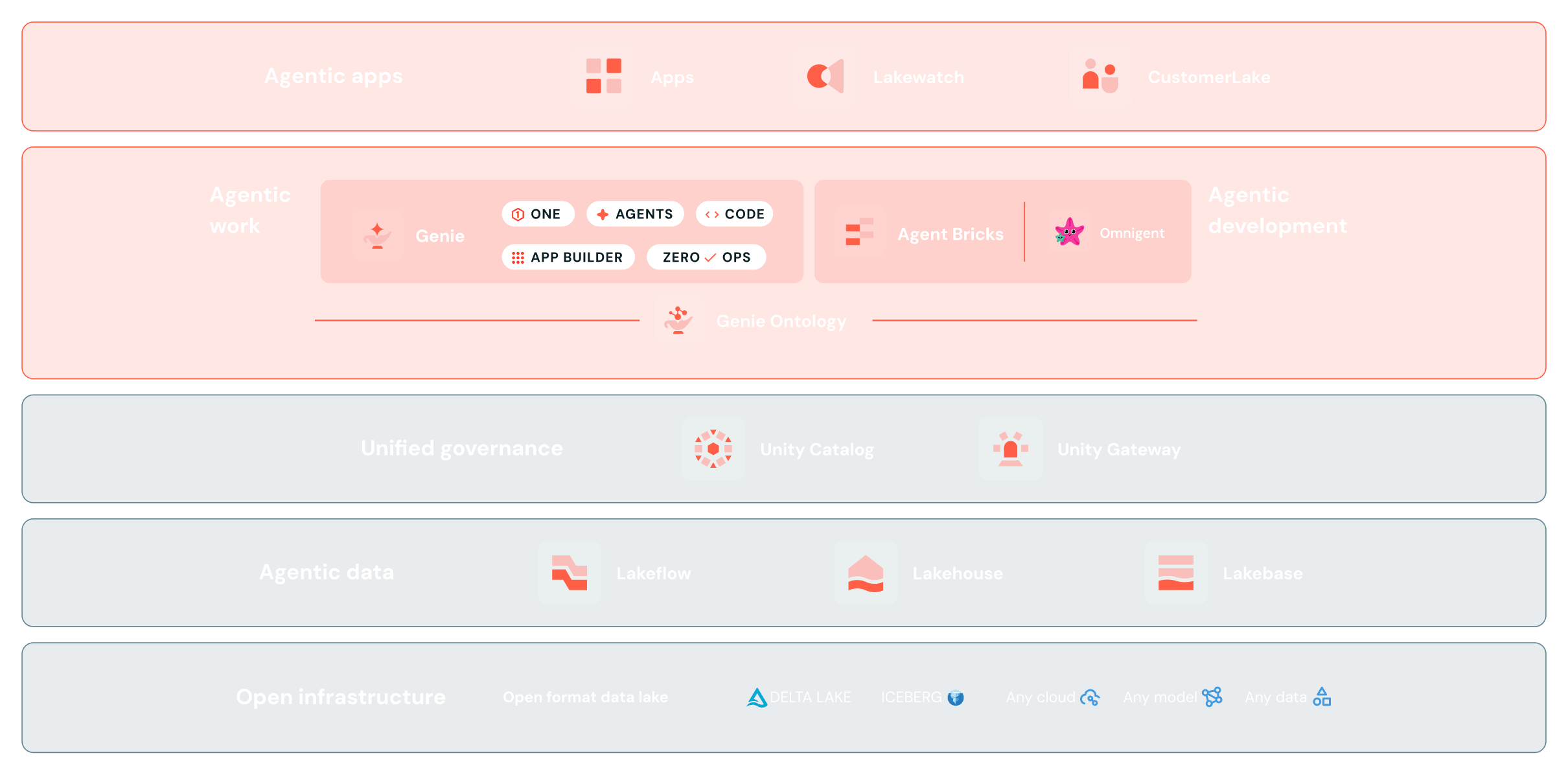
Enterprise data originates in applications, databases, clouds, equipment, logs and business systems. Without engineering and governance, volume only increases fragmentation. The Databricks Data Intelligence Platform creates a common foundation for organizing this journey.
Applications, databases, files, telemetry and events.
Ingestion, quality, transformation and orchestration.
Data structured on an open, scalable foundation.
Access, catalog, lineage, quality and auditing.
BI, analytics, ML, GenAI, agents and applications.
Context delivered to the right people and processes.
Artificial intelligence starts long before the model. It starts with data quality, governance and context.
The platform combines capabilities for data engineering, data warehousing, governance, business intelligence, machine learning and AI applications. The composition is defined according to sources, workloads, security, latency and use cases.
Batch and streaming pipelines to prepare data with quality and traceability.
SQL Warehouses for queries, dashboards and analytical consumption.
Policies and context for data, models, metrics and AI assets.
Development, evaluation, deployment and monitoring lifecycle for models and agents.
The Lakehouse combines open, scalable storage with transactional reliability, performance and governance. Delta Lake underpins this layer, while medallion architecture organizes data evolution according to quality and purpose.
Data ingested with source fidelity and history.
Validated, standardized, enriched and related data.
Data products oriented toward analytics and decisions.
Add Solution starts with sources, responsibilities, criticality, quality, security and expected outcomes. It then defines architecture, standards, integrations and operations so the platform remains sustainable.
Architecture starts with the decisions the data needs to support.
Rules, contracts and observability make problems detectable.
Identities, access and domains follow the data lifecycle.
We do not build pipelines just to move data. We build a foundation for turning data into decisions.
Lakeflow Connect supports source ingestion, Lakeflow pipelines organizes declarative batch and streaming transformations, and Lakeflow Jobs coordinates tasks and dependencies. The design considers latency, cost, recovery and operations.
Enterprise sources and data platforms.
Incremental, batch or streaming loads.
Quality rules and business logic.
Dependencies, schedules, events and recovery.
Data products for consumption and intelligence.
Unity Catalog centralizes discovery, permissions, auditing and lineage for data and AI assets. Add Solution structures domains, ownership, policies, classification and processes aligned with organizational reality.
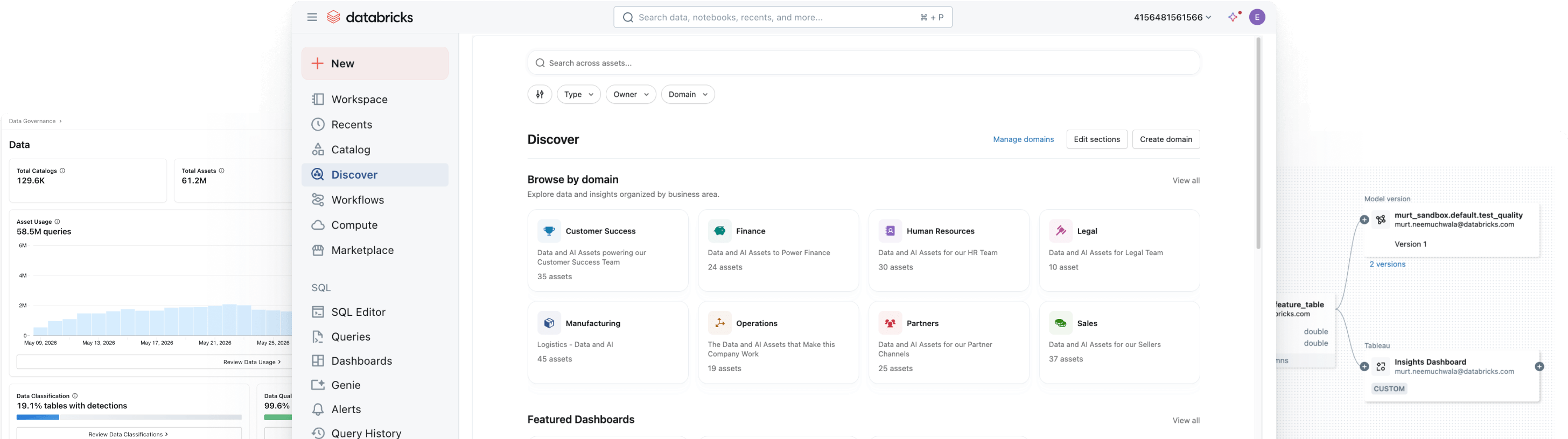
Consistent policies for catalogs, schemas, tables, files, models and functions.
Lineage supports auditing, investigation and change analysis.
Catalogs, descriptions and context reduce reliance on informal knowledge.
Enterprise AI without data governance turns speed into risk.
Databricks SQL and SQL Warehouses deliver analytical consumption with Photon acceleration. AI/BI connects dashboards and Genie to governed data, enabling natural-language questions when metrics, relationships and meanings are well defined.
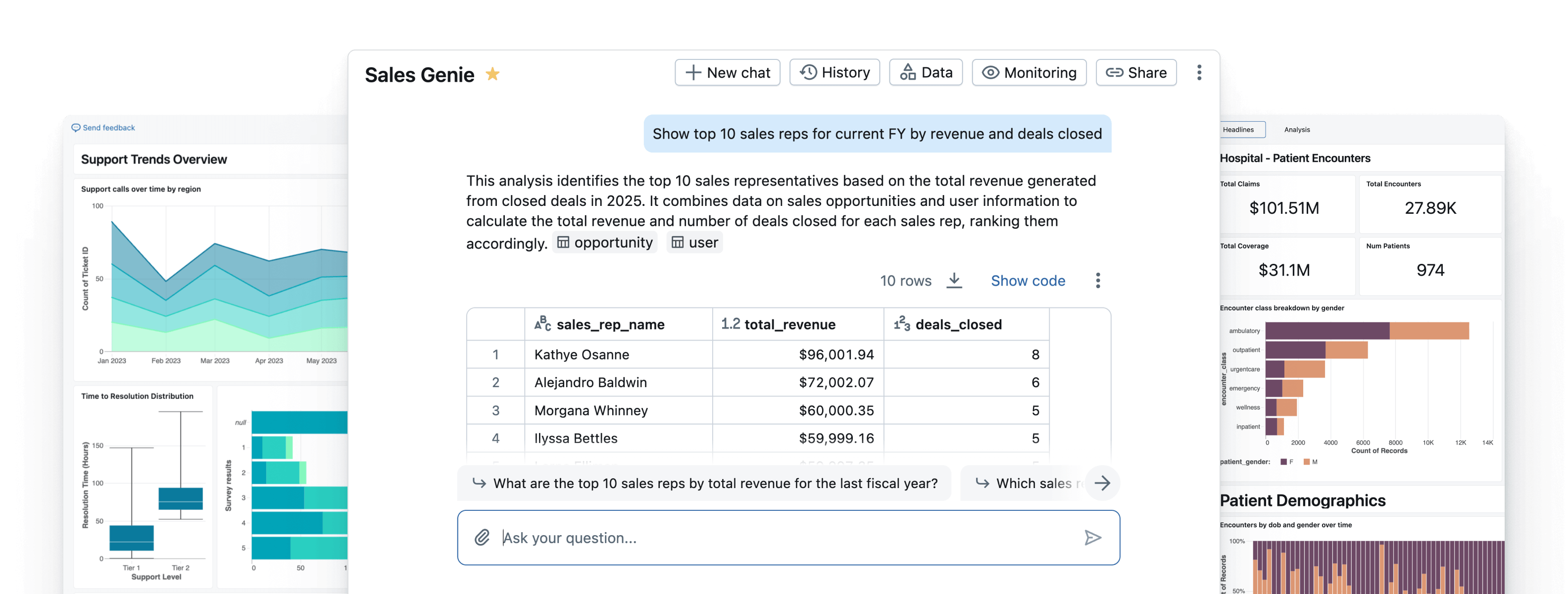
Asking in natural language is the final step. Before that, the data needs meaning.
Mosaic AI and MLflow support experimentation, evaluation, governance and deployment. Vector Search, Model Serving and Agent Bricks enable applications and agents to be composed with context retrieval, tools and quality criteria.
Authorized content and signals.
Access, lineage and policies.
Semantics, embeddings, retrieval and tools.
Evaluation, serving, orchestration and monitoring.
Experience integrated into the business process.
Lakebase adds managed PostgreSQL for operational applications and agent state without replacing the analytical Lakehouse. Delta Sharing supports open sharing. Projects can be designed on AWS, Azure or Google Cloud according to strategy, requirements and available services.
Access controls, networks, secrets, encryption, auditing and segregation.
Compute policies, serverless where applicable, tags, budgets and workload optimization.
Quality, failures, duration, consumption, queries, models and SLAs monitored continuously.
Data and product sharing with governance and clear contracts.
Add Solution combines cloud, infrastructure, security, data and observability to structure the journey without separating architecture, deployment and ongoing operational support.
Lansweeper asset data, Zabbix metrics, Progress Flowmon network telemetry and information from enterprise systems can form an analytics architecture when connectors, contracts, permissions and use cases are defined. This is a possible architectural relationship, not a claim of native product integration.
Add Solution can assess sources, architecture, governance, quality, security, consumption, costs and use cases to define a focused, sustainable Databricks journey.
Our work connects cloud, infrastructure, security, governance, observability and operational context so the investment becomes data products that are used and sustainable.
Sources, ingestion, storage, consumption, AI and operations treated as one chain.
Ownership, policies, quality and lineage built into the design.
Observability, costs, security and recovery defined before production.
Decisions and outcomes guide technical priorities.
Talk to our specialists about lakehouse architecture, data engineering, governance, analytics, machine learning and artificial intelligence with Databricks.