Architecture and flows
Zones, routes, applications, identities and access guide control placement.
Firewalls, gestão, acesso seguro e proteção de usuários e aplicações. A Add Solution apoia a definição da arquitetura e a seleção dos componentes para conectar segurança às necessidades da sua operação.
Features, capacity, licensing and availability vary by product, version, region and configuration.

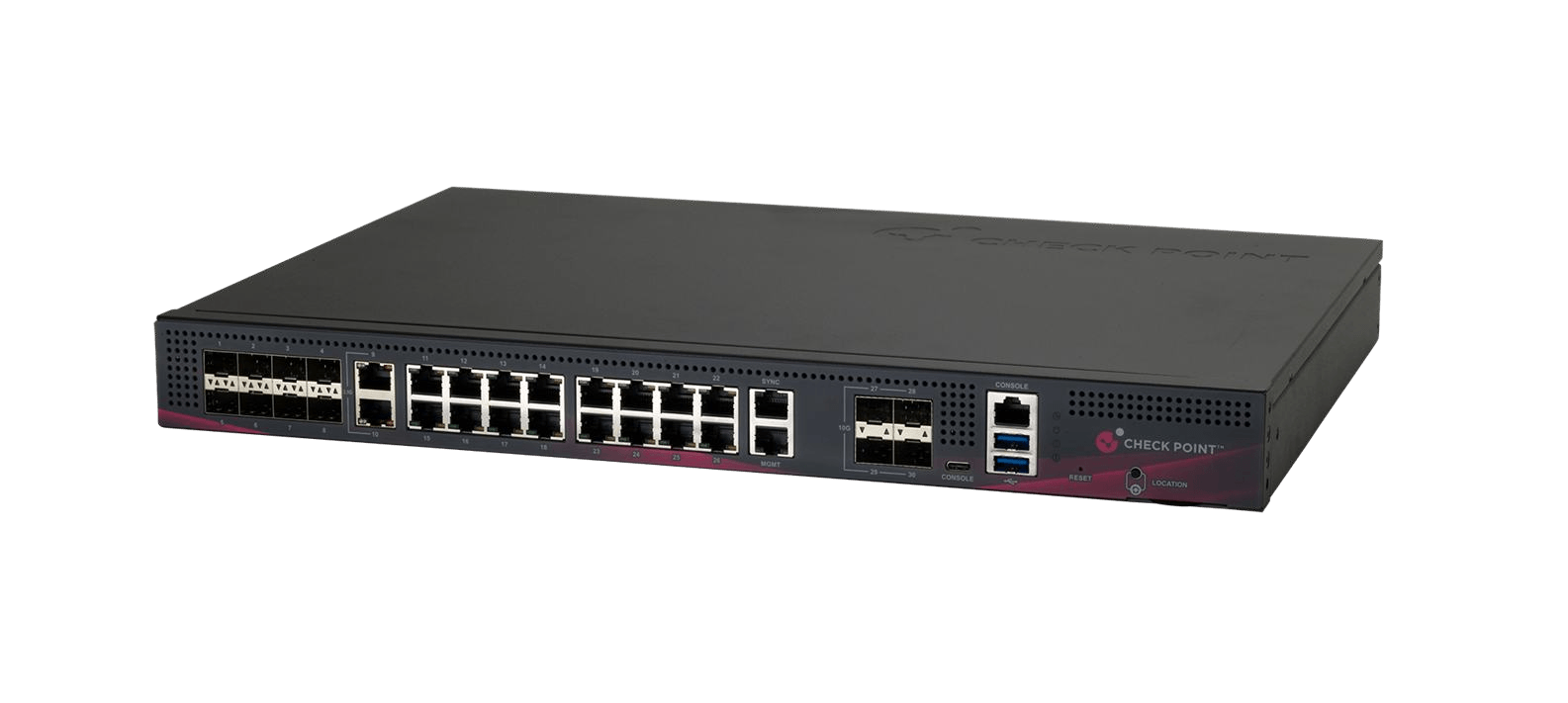
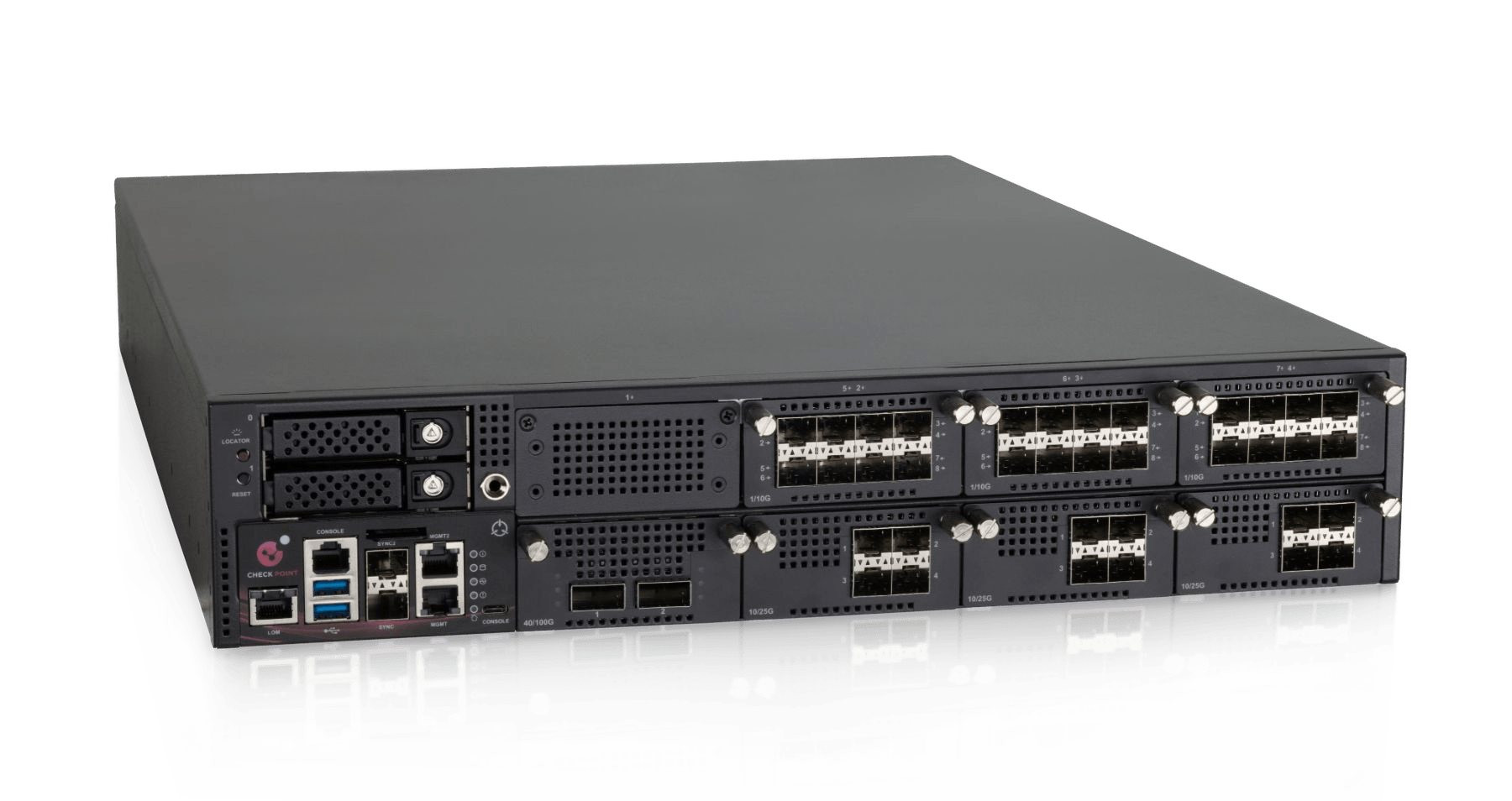
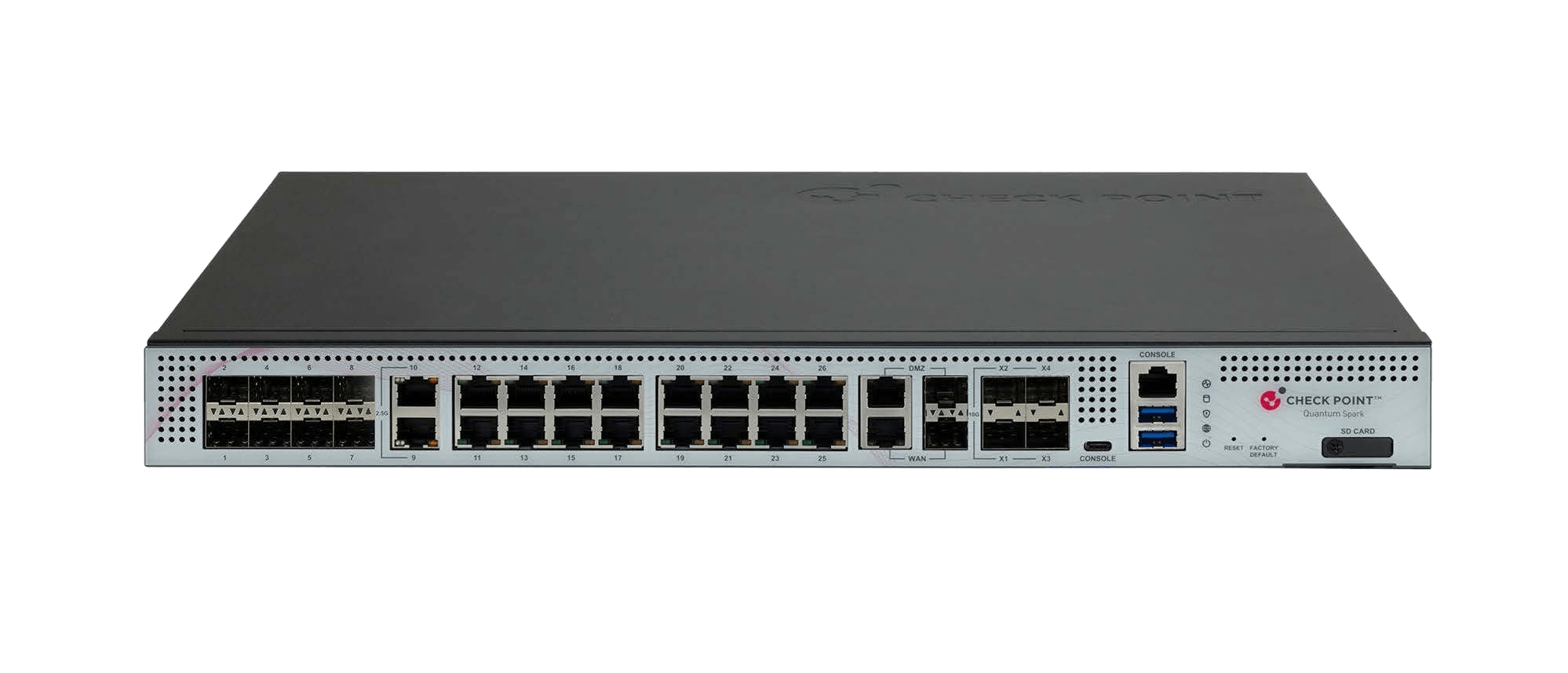
Categories guide discovery; the final choice considers inspected traffic, sessions, interfaces, availability, licensing, region and operations.
The project starts with applications, networks that need to communicate and access that must be restricted. With this view, the engineering discussion can define control placement, assess capacity and plan deployment. Hardware, licenses, management and professional services must have explicit scopes. The proposal can be built around the environment's configuration, integration, change and support needs without assuming every portfolio feature is included in a single product. Consult Add Solution about the technical composition, availability and scope of supply and service for your project.
Zones, routes, applications, identities and access guide control placement.
Sessions, VPN, encrypted traffic and enabled services are part of the assessment.
Gateways, logs, administrative segregation and retention inform the decision.
Dependencies, windows, testing, acceptance, upgrades and recovery are defined in the project.
A security rule must still make sense when an application moves to another environment, a branch opens or a user starts working remotely. The challenge is not just adding controls: it is keeping identity, traffic, administration and visibility aligned.
The Check Point portfolio brings together physical gateways, cloud network protection, centralized management and security for access, endpoints and email. These components have different roles and must be selected according to the company's architecture and operating model. Features vary by license, version and platform. Security policy, capacity with inspection enabled and the maintenance lifecycle are part of the project from the start.
Selection combines role, capacity, compatibility, lifecycle and operating model — not just nominal throughput.
Architecture and flows Define zones, routes, applications, identities and external access before writing rules. Identify forward and return traffic paths, dependencies and the points where inspection will be applied. Sizing Work with the actual load, including concurrent sessions, VPN and encrypted traffic. Firewall, NGFW and Threat Prevention metrics represent distinct conditions; an interface's nominal speed does not indicate how much traffic it inspects with all controls active. Management and licensing Choose between local administration, a dedicated platform and a cloud service according to the environment. Gateway count, log volume and retention, administrative segregation and availability influence architecture and cost. Deployment and change Establish scope, dependencies, windows, tests and acceptance criteria. Firewall migration is not just importing rules: it means checking objects, NAT, VPN, routing, identity and application behavior. Sustainable operations Define owners for policies, updates, event analysis and recovery. Review hardware and software support, compatibility and vendor advisories. Backup without recovery validation does not solve continuity on its own.
Migration checks objects, NAT, VPN, routing, identity, applications, testing and rollback.
A security rule must still make sense when an application moves to another environment, a branch opens or a user starts working remotely. The challenge is not just adding controls: it is keeping identity, traffic, administration and visibility aligned. The Check Point portfolio brings together physical gateways, cloud network protection, centralized management and security for access, endpoints and email. These components have different roles and must be selected according to the company's architecture and operating model. Features vary by license, version and platform. Security policy, capacity with inspection enabled and the maintenance lifecycle are part of the project from the start.
Businesses and branches: select connectivity and the administration model without applying the same configuration to sites with different requirements. Enterprise edge: organize policies, inspection and availability across internal networks, internet access and published services. Data centers: combine inspection capacity, interface expansion and scale design; assess Maestro only when the architecture justifies its complexity. Industrial environments: verify installation conditions and process sensitivity, with policies and tests specific to operational flows. Hybrid cloud: maintain consistent policies and integrate controls with the provider's networking and automation mechanisms. People and collaboration: combine access, endpoint and email protection with identity and alert handling, without confusing tools with a human response service.
Clear answers for architecture, deployment, licensing and operational decisions.
The current catalog lists Spark Firewalls for SMBs and MSPs and Force Firewalls as a distinct family. Project suitability must not be inferred from the name alone: compare the exact model, topology, management approach, interfaces, enabled services and capacity under the published conditions.
Commercial naming evolves, and documentation, URLs, contracts and consoles may retain earlier names. The page should use the current name and record aliases only for discovery and migration. An old name alone does not prove end of sale or support.
No. The current catalog treats Cloud Firewall as network protection and separately lists the Cloud Firewall NGFW & Wiz CNAPP combination. Commercial status, entitlements and transition for any CNAPP environment must be confirmed in the contract and current documentation; this page does not publish lifecycle dates without a direct official policy.
This must not be assumed. Wireless and cellular features, interfaces and accessories must be checked by model, variant and SKU in the exact official data sheet. A family image or description does not justify transferring connectivity assumptions between variants.
No. Compare enabled services and measurement conditions, including threat prevention, TLS inspection, sessions, VPN, packet size and version. A standalone firewall figure does not automatically represent the capacity of the deployed scenario.
No. Smart-1 and Network Security Management administer policies, objects, logs and auditing; gateways apply policies to traffic. Management, logging and gateways must be sized as different roles.
Equivalence must not be assumed. Access methods, connectivity, migration, retention, features, administration and data requirements must be compared. The documentation also specifies one Smart-1 Cloud environment per portal account.
Not necessarily. Sales, development/engineering and support may have different milestones. The decision must consult the current official policy, product table and software version; this page does not generalize dates across models.
Only when coverage, channels, responsibilities, times and service levels are expressly defined in the contracted proposal. Product features and vendor services do not, on their own, constitute a 24×7 SLA from Add Solution.
Compartilhe o contexto da operação, quantidade de usuários, localidades e objetivos do projeto. A equipe Add Solution direcionará a conversa para especialistas em arquitetura, dimensionamento, licenciamento e implantação Check Point.
Tell us which applications, sites and access paths need protection. These requirements help select the portfolio and establish a clear technical scope.
Selecione um produto para consultar especificações, contexto de aplicação e documentos oficiais.
Valores publicados pelo fabricante. O dimensionamento final considera arquitetura, tráfego, serviços ativos, redundância e crescimento.
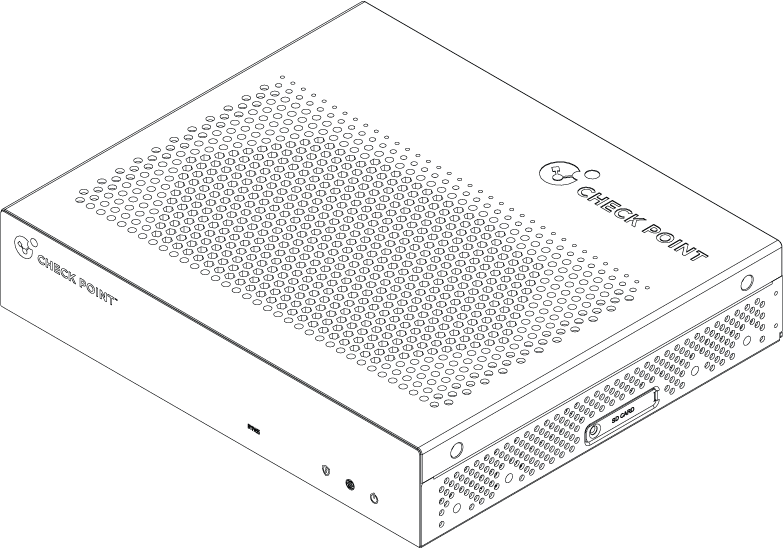
Desktop firewall for small wired sites, with six Gigabit LAN ports and a Wi-Fi 7 option.
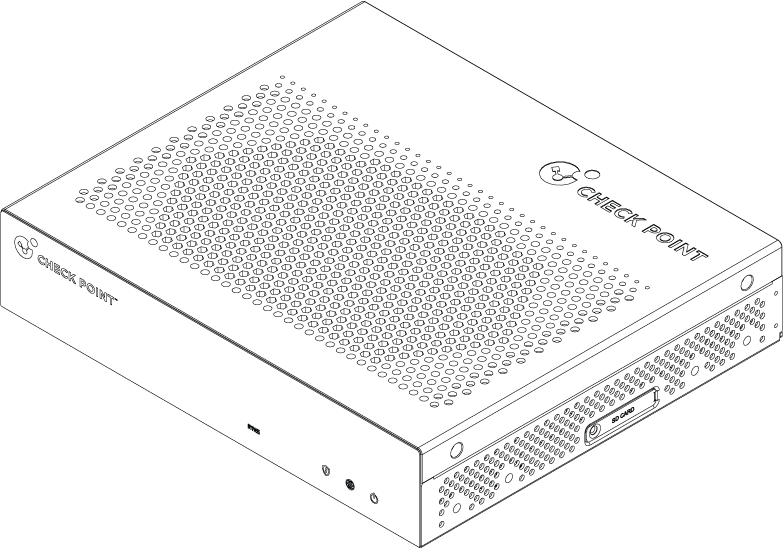
Gigabit desktop firewall with greater inspection capacity than the 2530 and a Wi-Fi 7 variant with 5G RedCap.
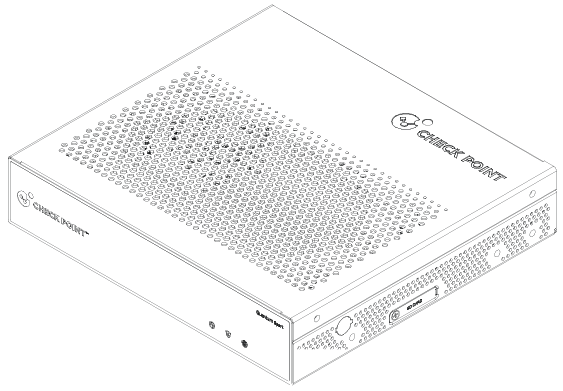
Desktop firewall with eight Gigabit LAN ports and two 10 GbE SFP+ links for branches with fibre aggregation.
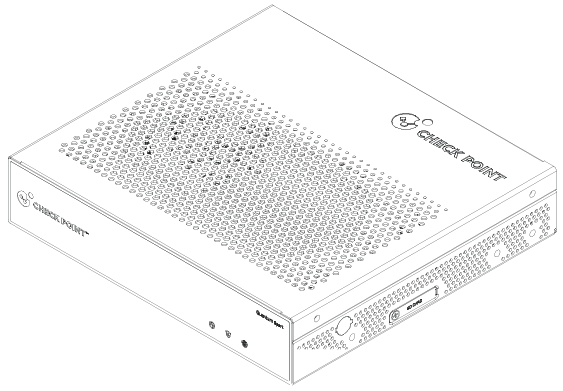
Desktop firewall with 10 GbE SFP+, increased inspection capacity and a Wi-Fi 7 variant with 5G cellular connectivity.
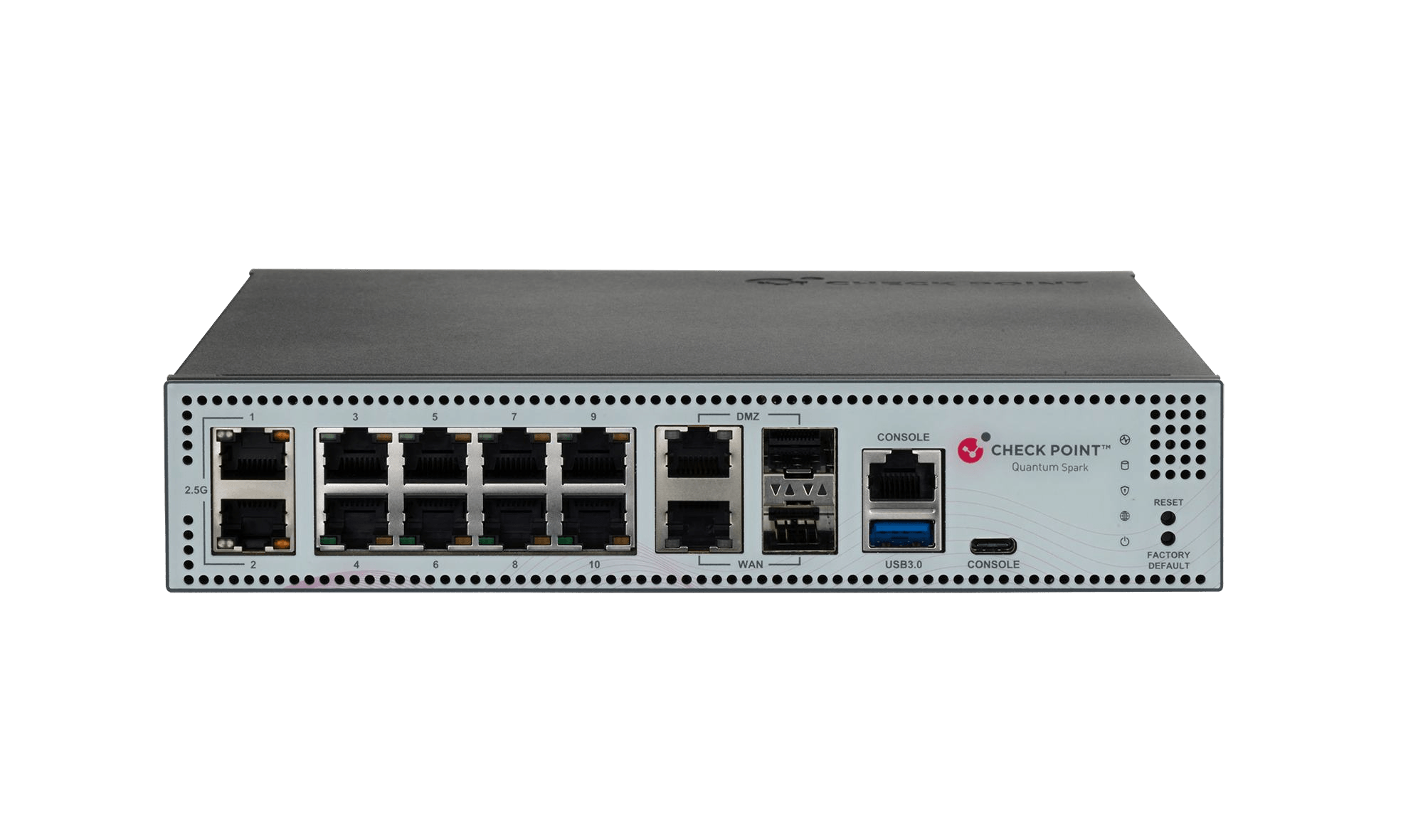
Half-width rack wired firewall with 10 GbE combo WAN and DMZ interfaces and two 2.5 GbE LAN ports.
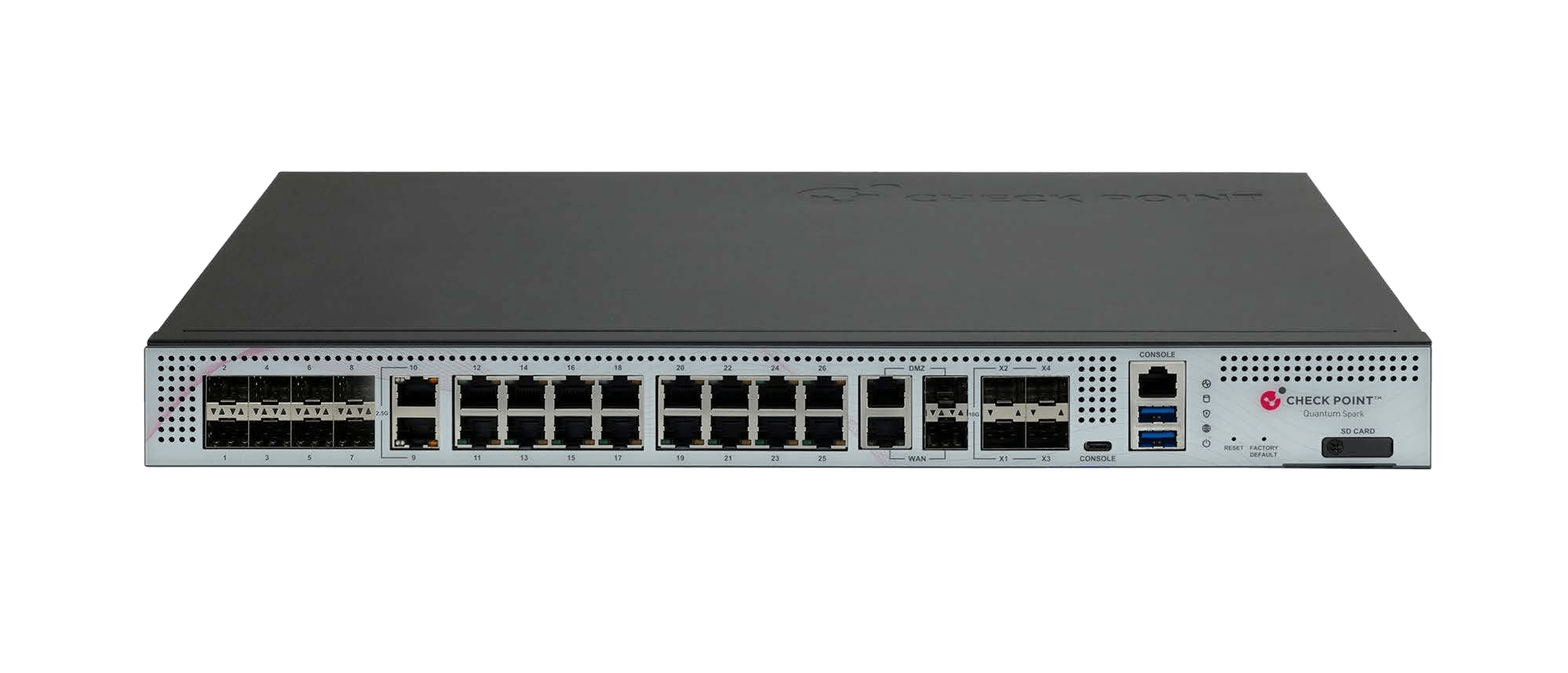
1U Spark firewall with high copper and fibre density, four 10 GbE SFP+ slots and reference TP of 5.5 Gb/s.
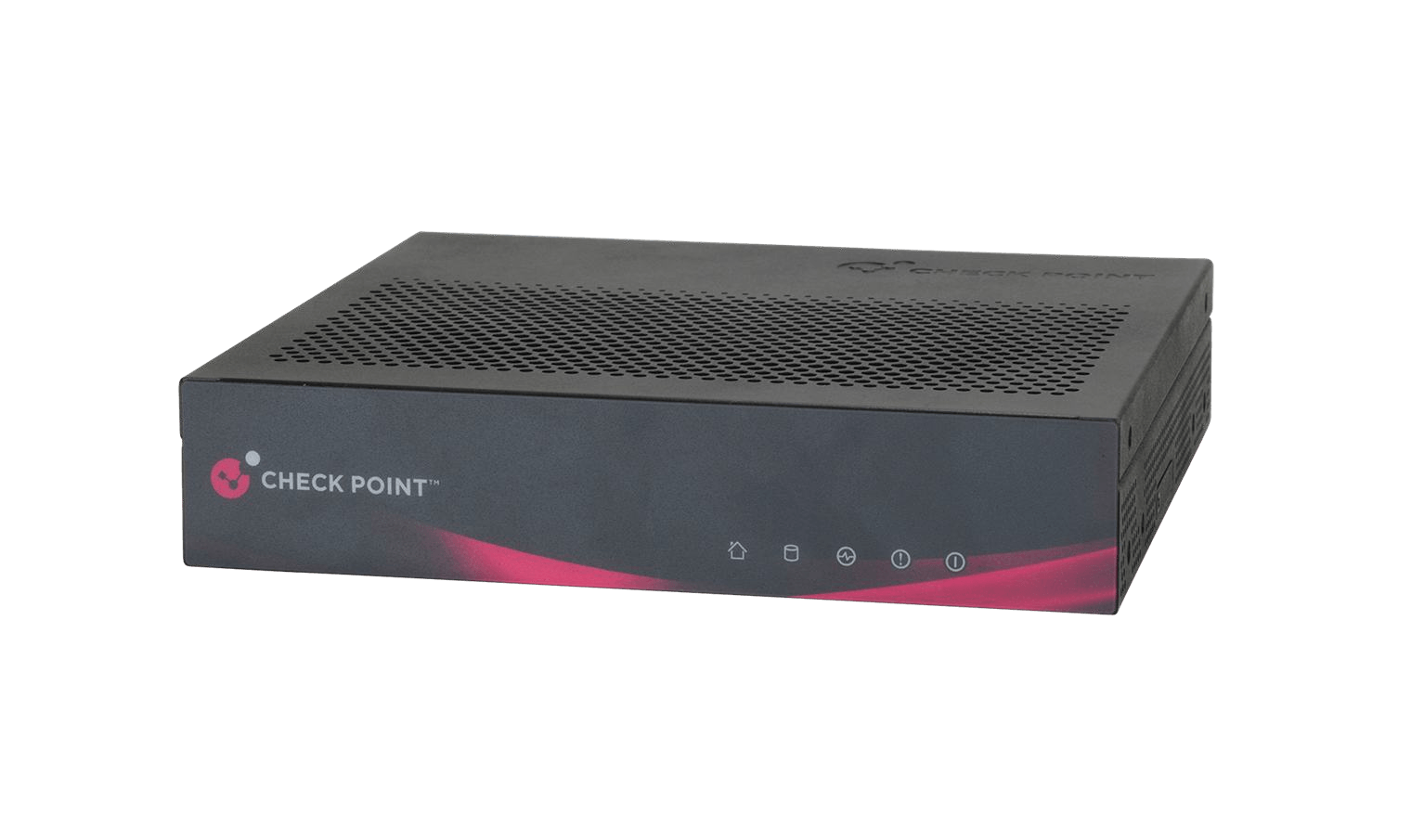
Quiet desktop branch firewall with 10 GbE optical uplinks and 3.2 Gbps Threat Prevention.
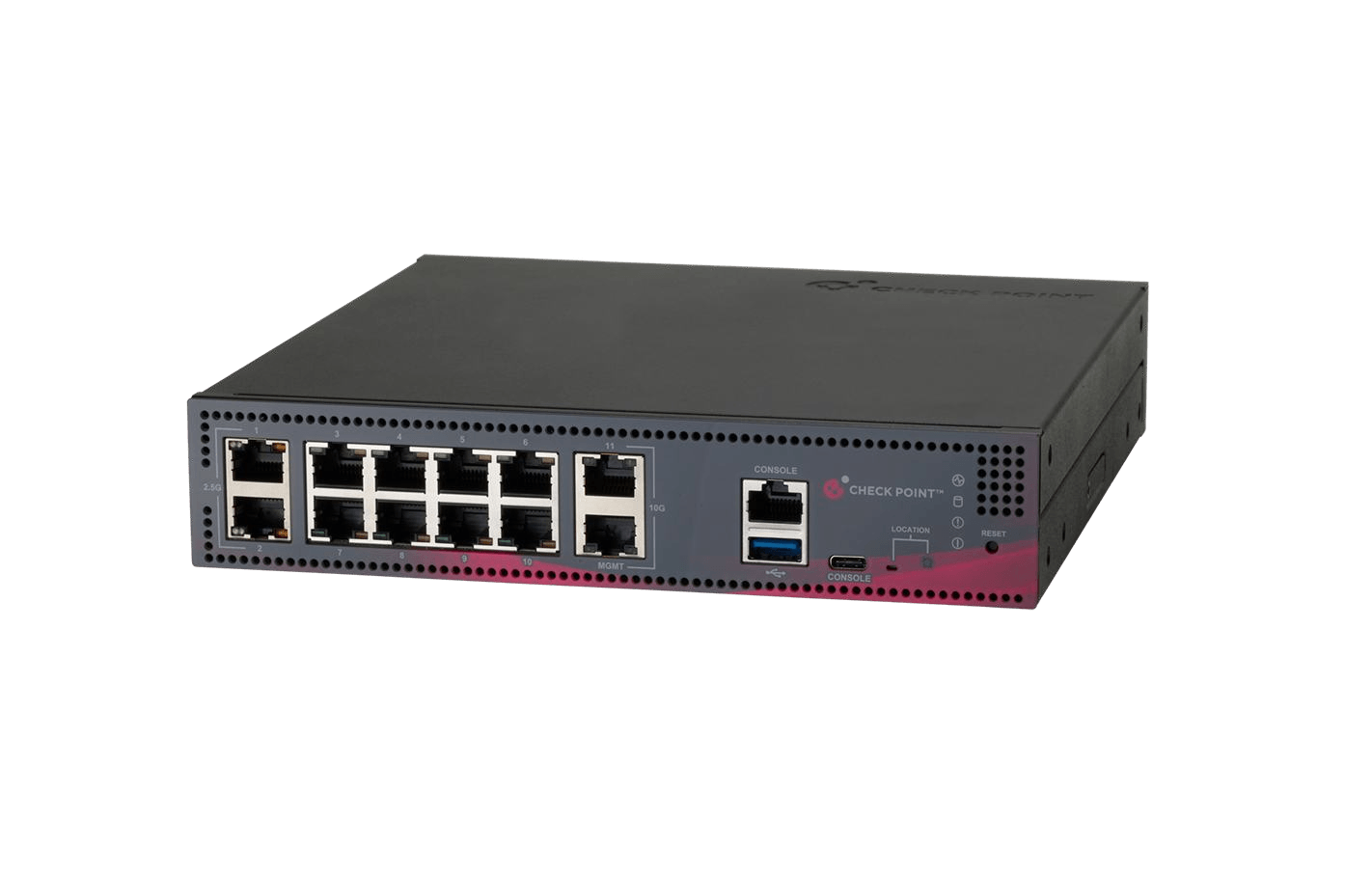
Desktop firewall with 2.5 and 10 GbE RJ45 ports and 5.5 Gbps Threat Prevention.
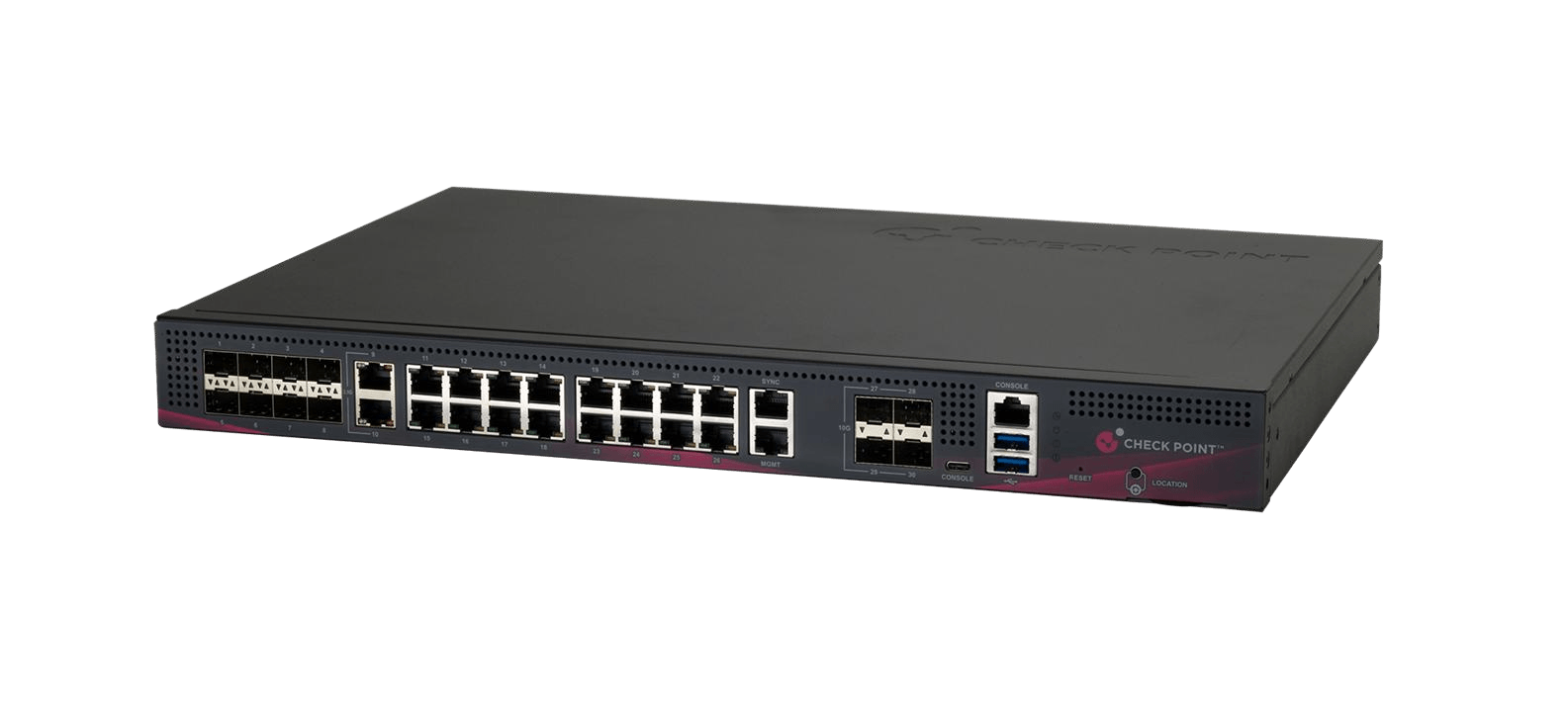
1U branch firewall with high port density and 4.25 Gbps Threat Prevention.
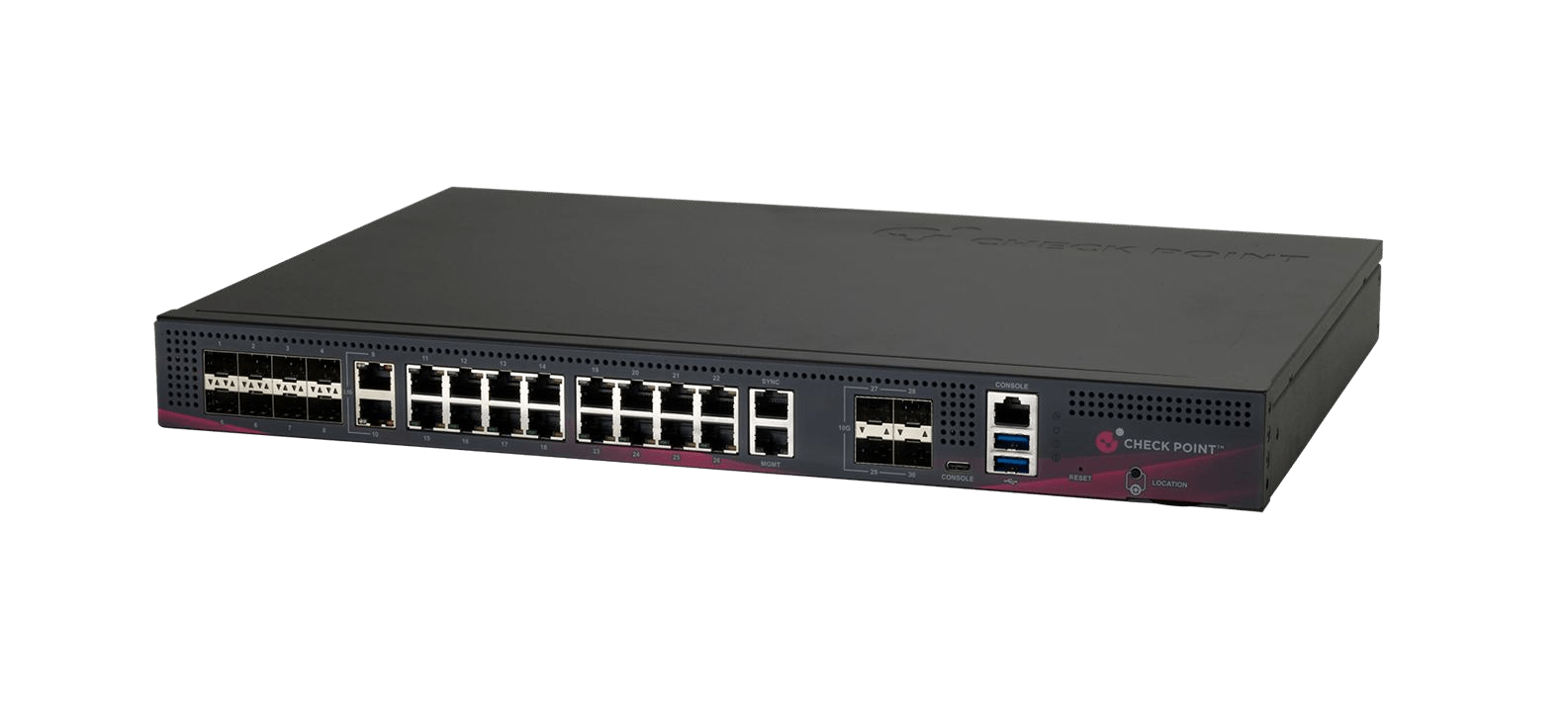
1U branch firewall with four 10 GbE SFP+ slots and 7 Gbps Threat Prevention.
1U enterprise firewall with 6.5 Gbps Threat Prevention and network expansion up to 25 GbE.
1U firewall with 8 Gbps Threat Prevention and a laboratory VPN reference of 28.6 Gbps.
1U firewall with ten physical cores, 10.5 Gbps Threat Prevention and modular connectivity up to 25 GbE.
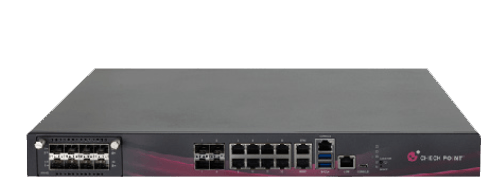
1U firewall with 14 Gbps Threat Prevention and a 40/100 GbE card option.
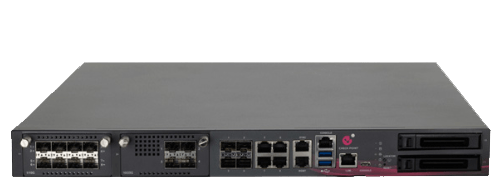
1U firewall with two network slots, 20 Gbps Threat Prevention and memory expansion up to 128 GB.
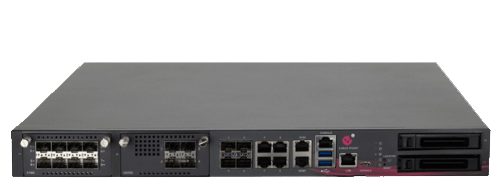
1U firewall with 25 Gbps Threat Prevention, 20 physical cores and two expansion slots.
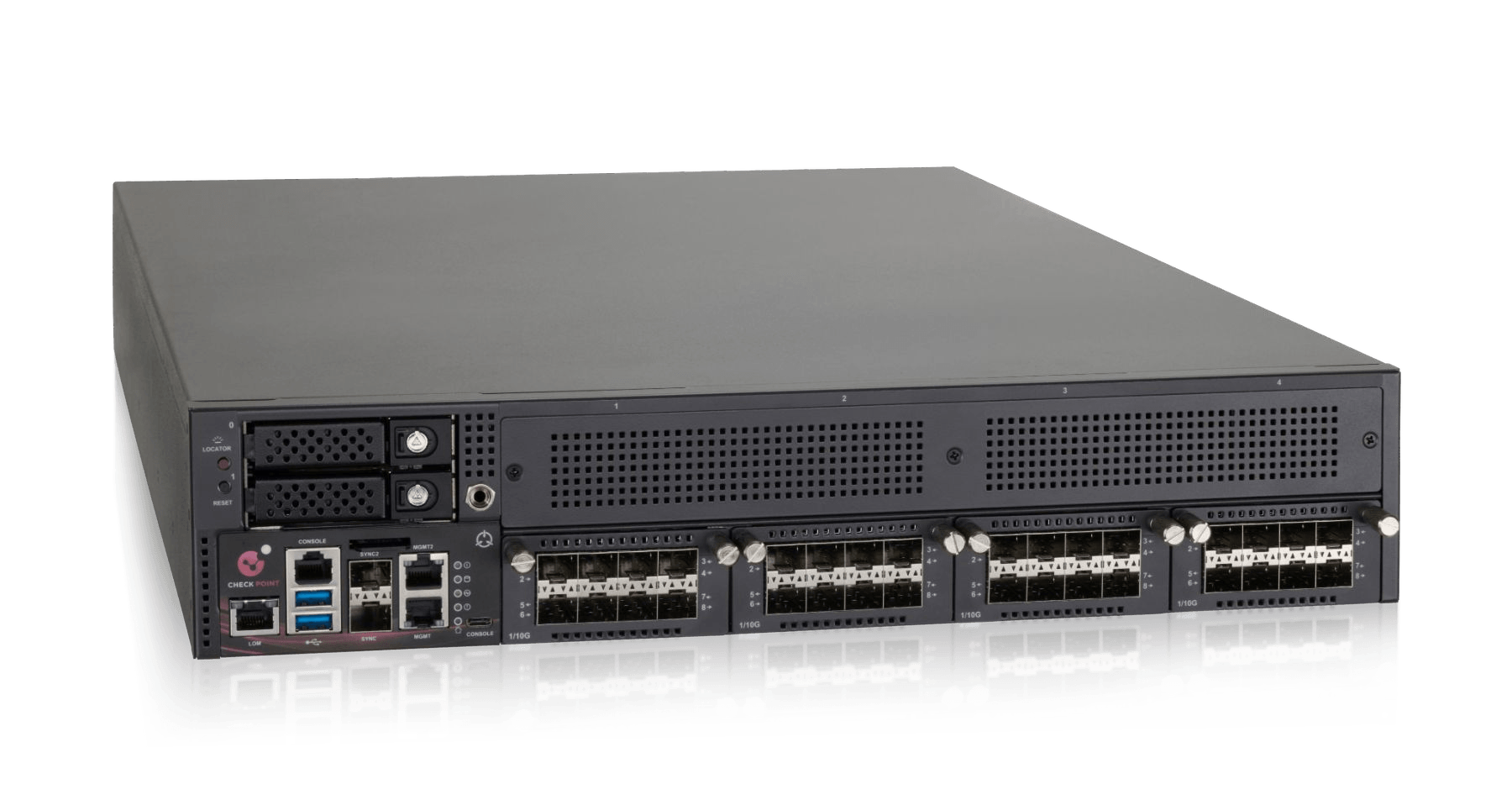
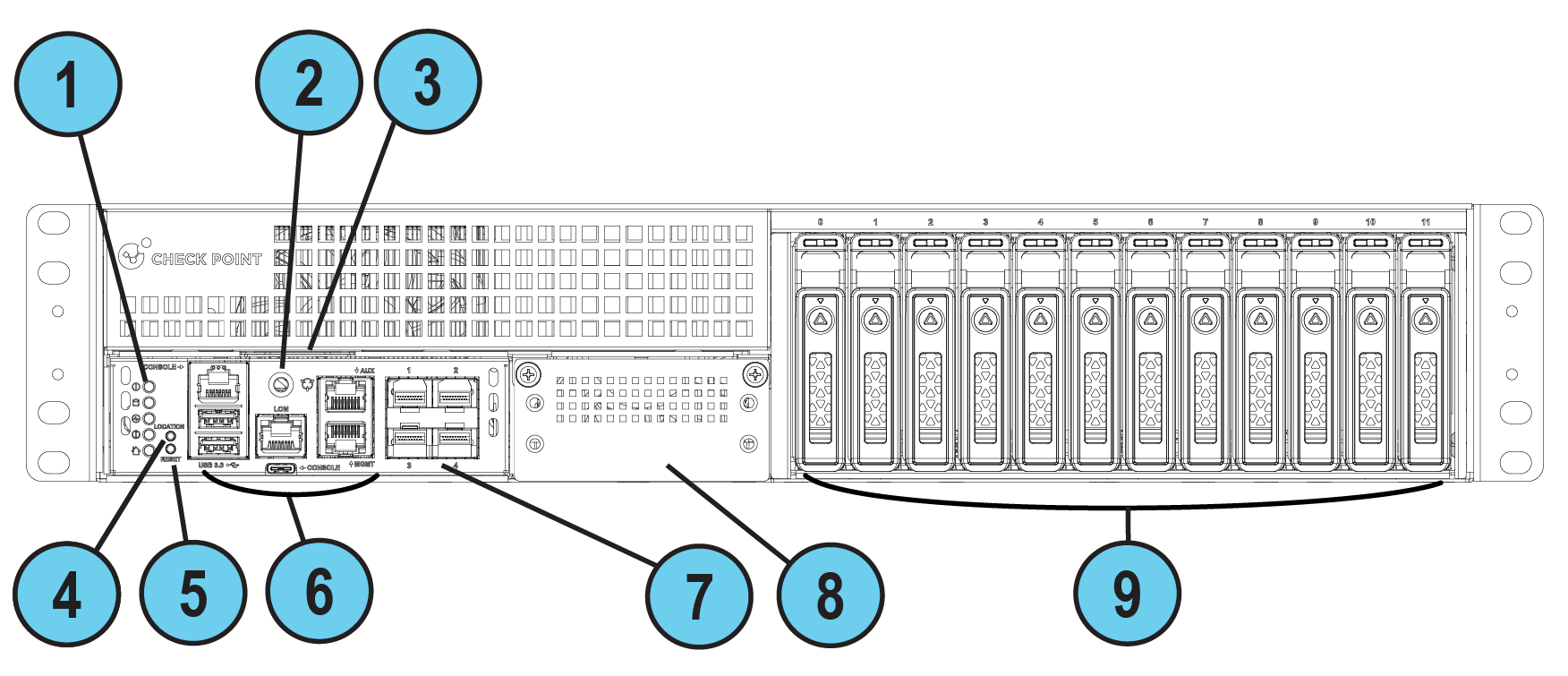
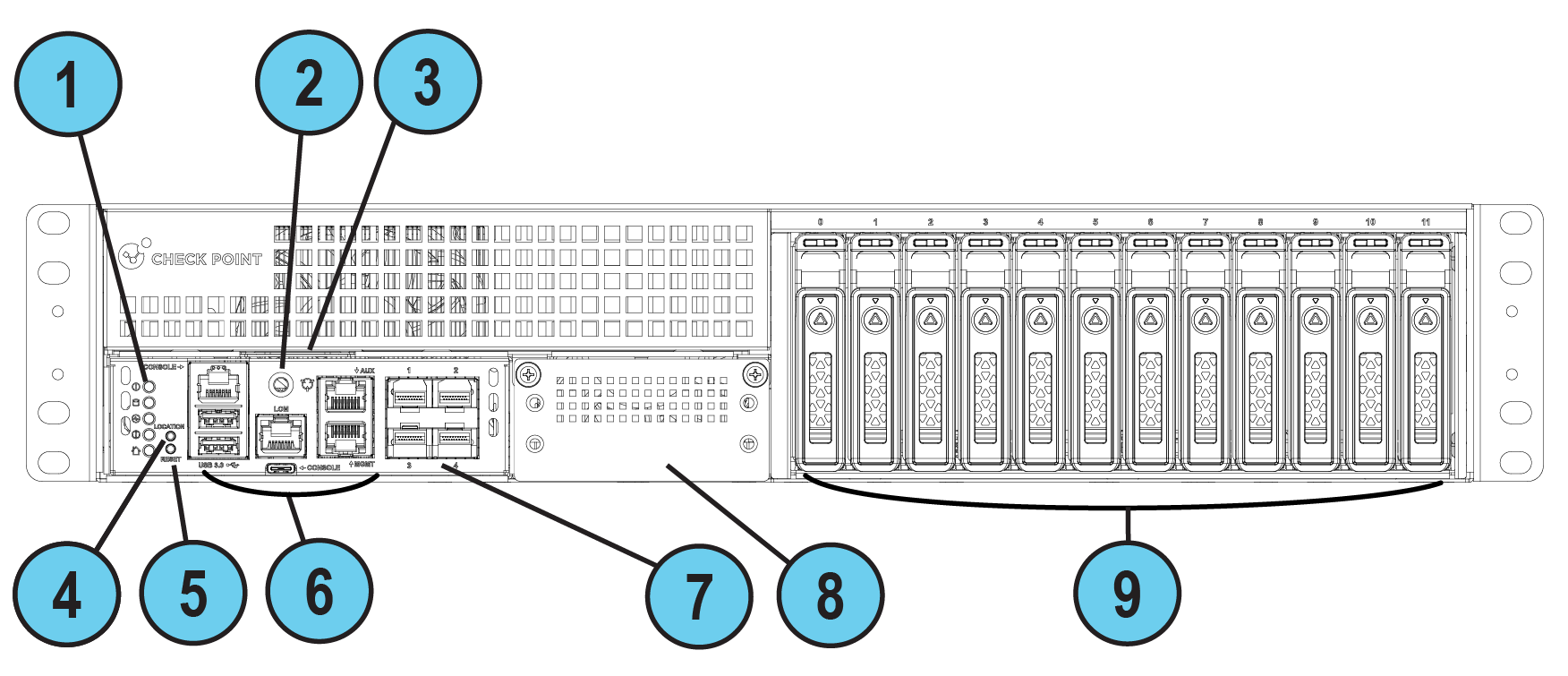
2U data centre firewall with four slots and 35 Gbps Threat Prevention.
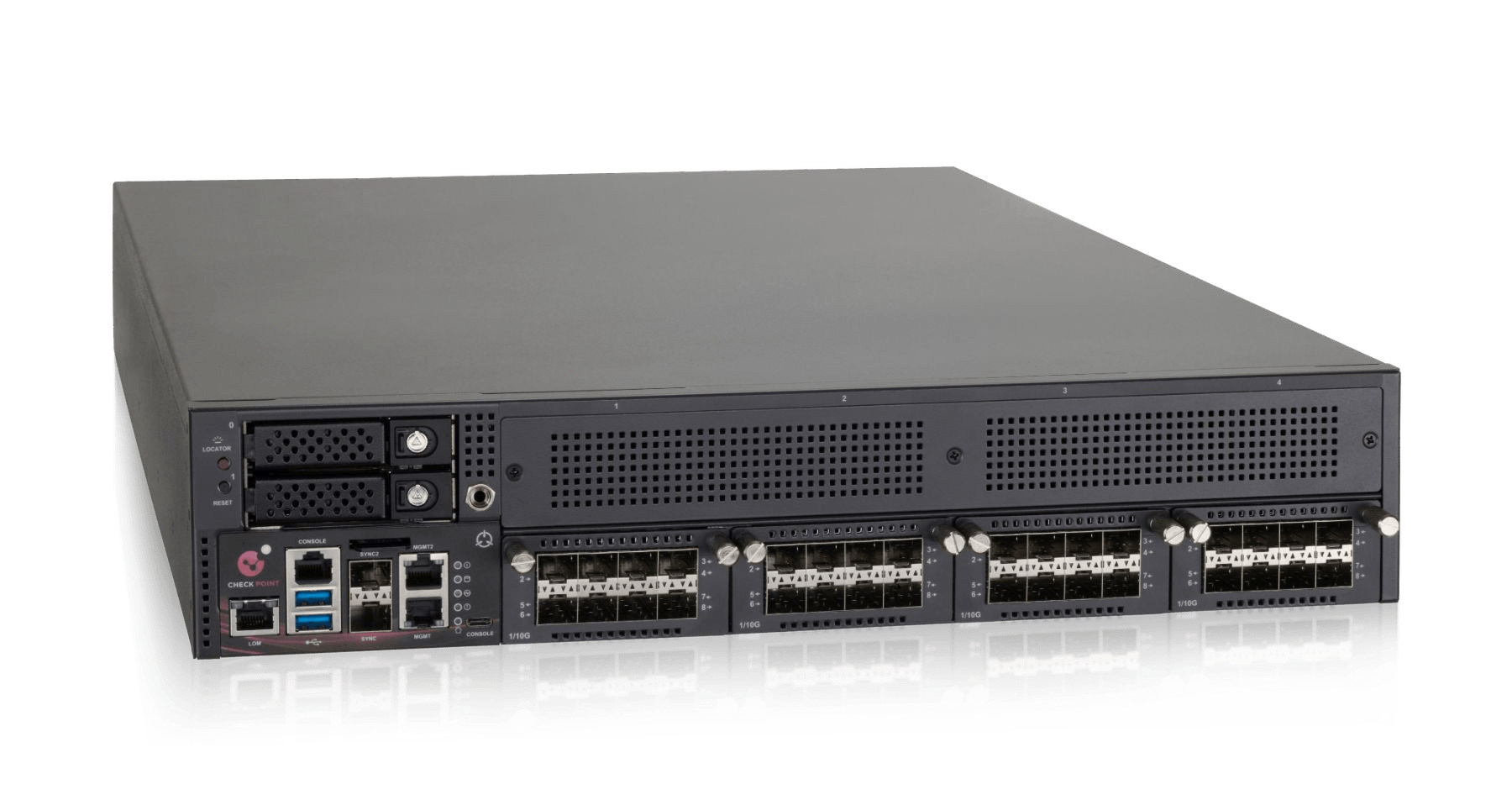
2U firewall with 44 Gbps Threat Prevention and a reference of one million new connections per second.
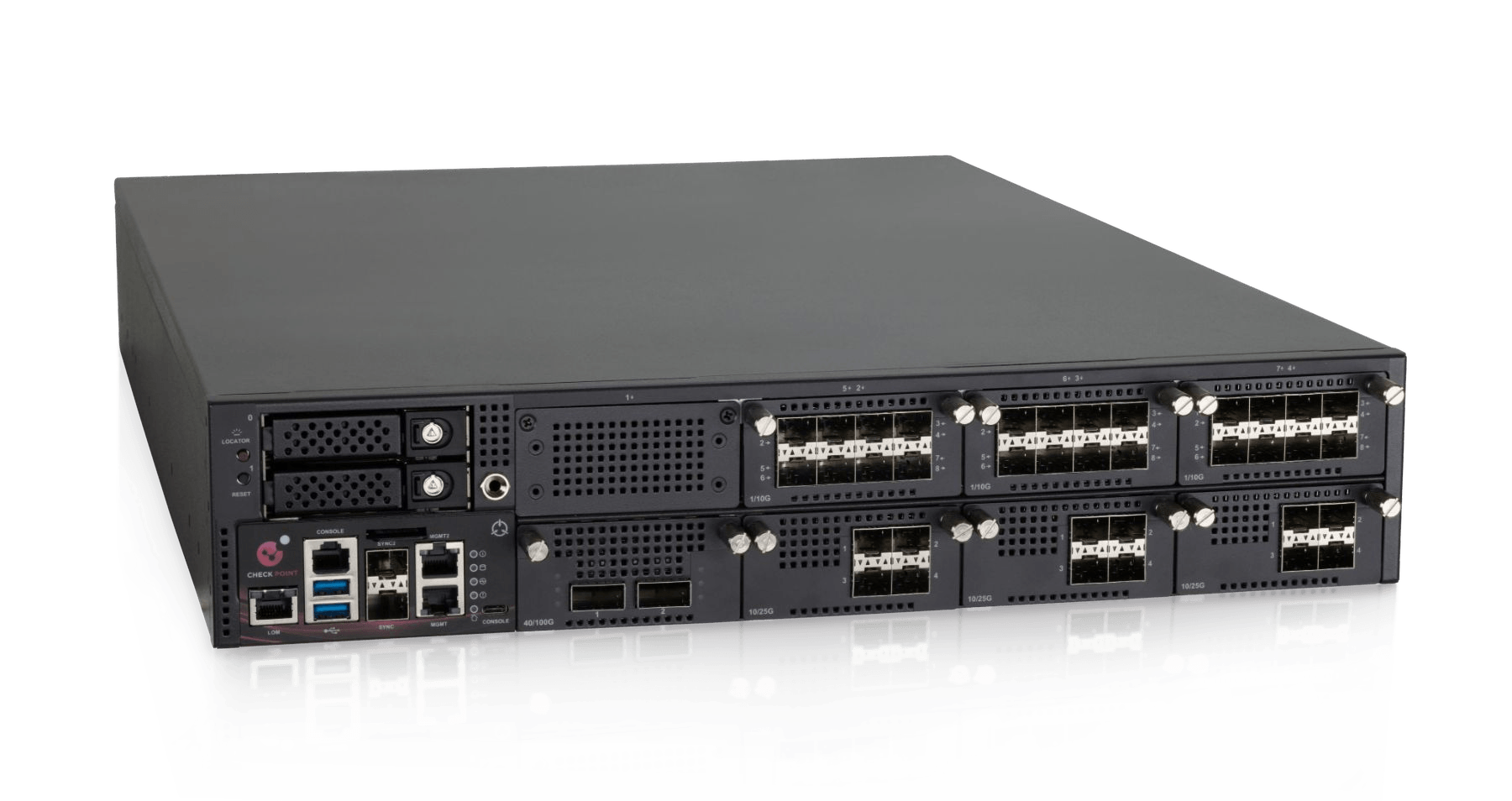
2U firewall with seven network slots and 60 Gbps Threat Prevention.
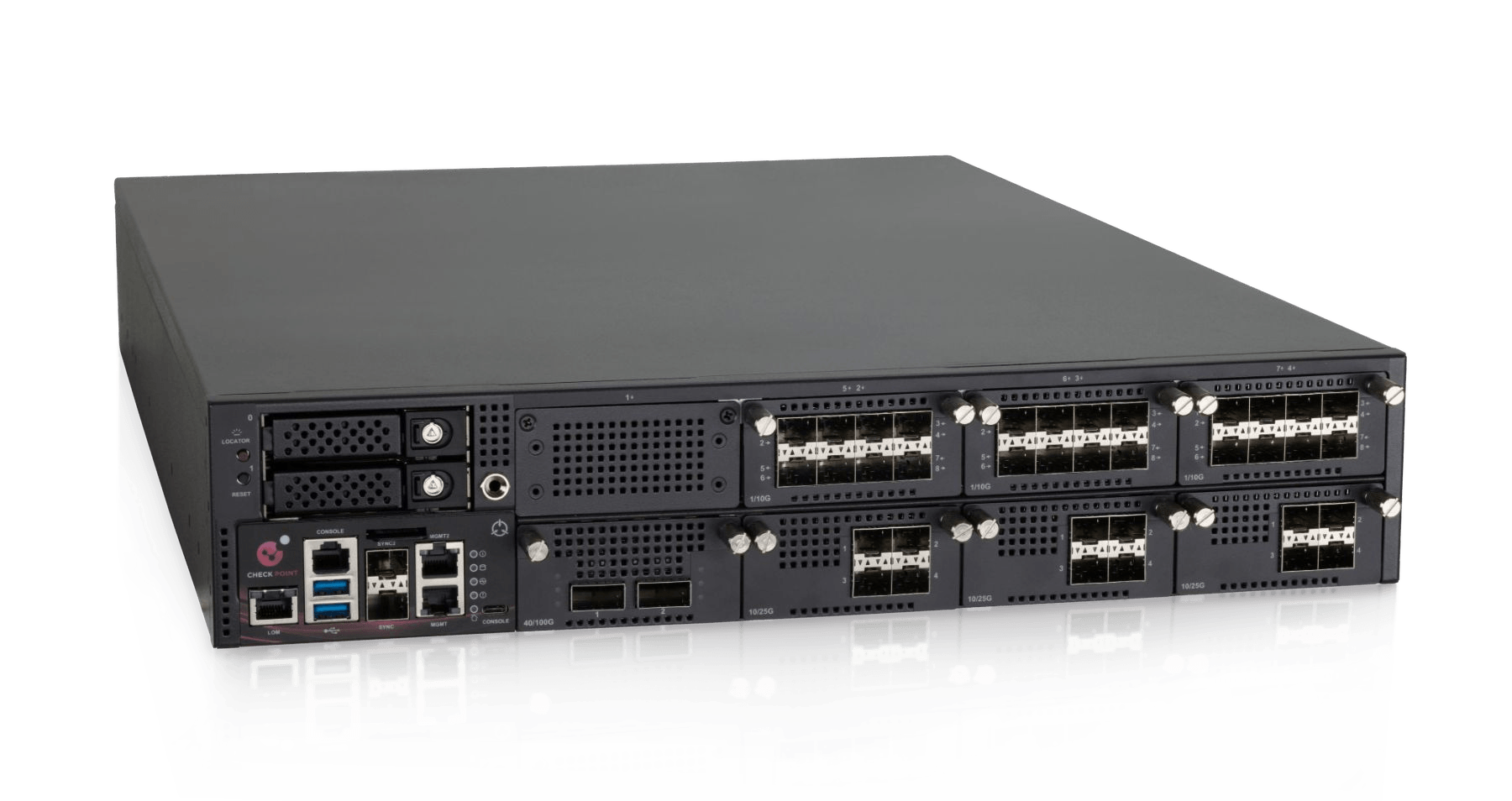
2U data centre firewall with 75 Gbps Threat Prevention and seven expansion slots.
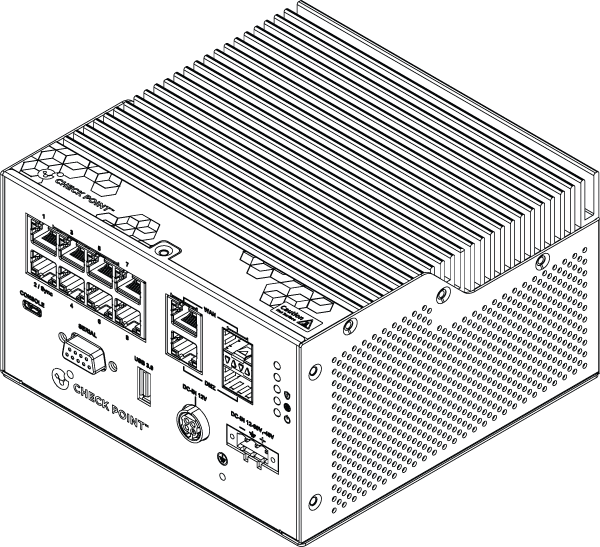
Fanless industrial firewall with eight Gigabit LAN ports, a DB9 serial port and a Wi-Fi 6 variant with LTE.

Maritime variant of the Rugged 1575R, with specific power supply, mounting and temperature-range requirements.
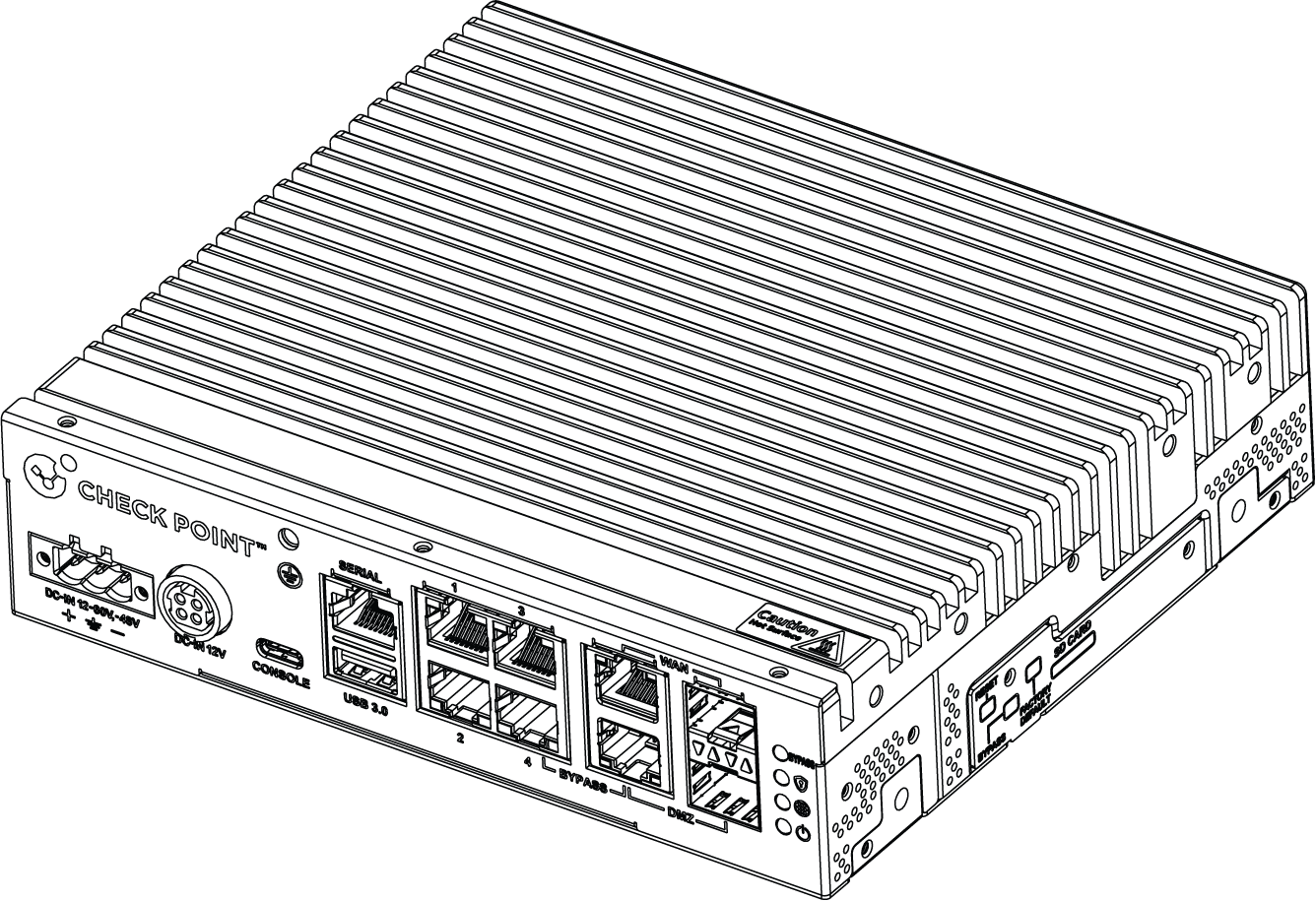
Compact industrial firewall with four Gigabit LAN ports, a dual-SIM 5G version and documented bypass on the wired variant.
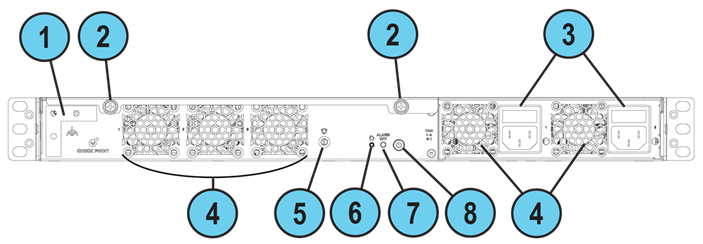
Dedicated management for up to 10 gateways, with centralised logs, mirrored storage and 1U hardware.
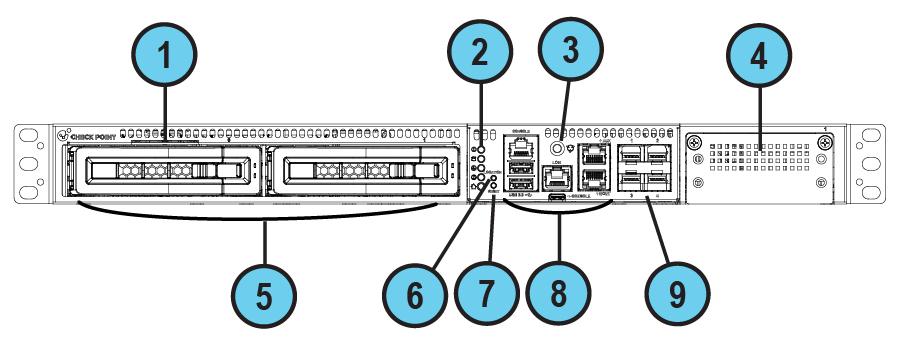
On-premises management for up to 50 gateways, with 8 TB of usable HDD capacity and power supplies replaceable during operation.
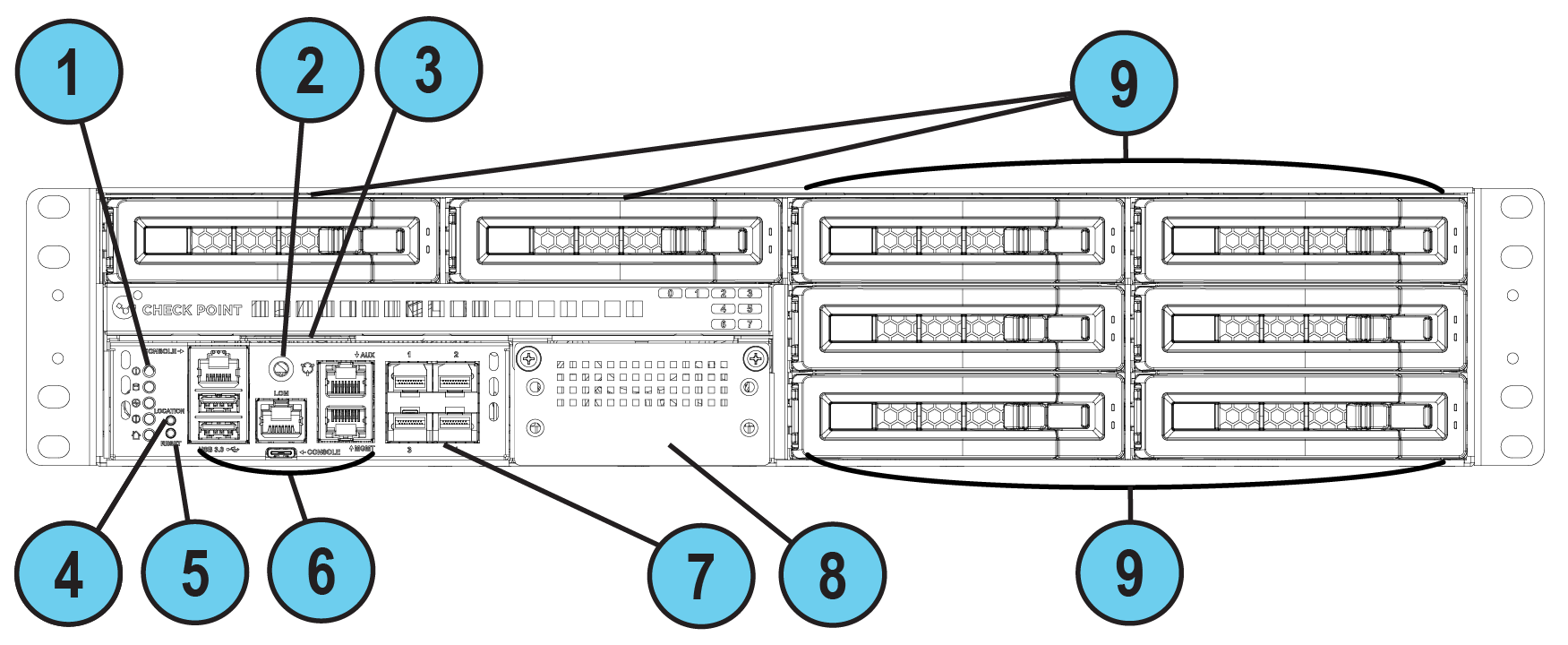
2U appliance for managing up to 150 gateways, with HDD expansion and support for Multi-Domain administration.
Large-scale management with NVMe SSDs, up to 60,000 logs/s and licensed expansion to thousands of gateways.
Highest-capacity model in the Smart-1 7000 line, with up to 75,000 logs/s and 8 TB NVMe SSDs.
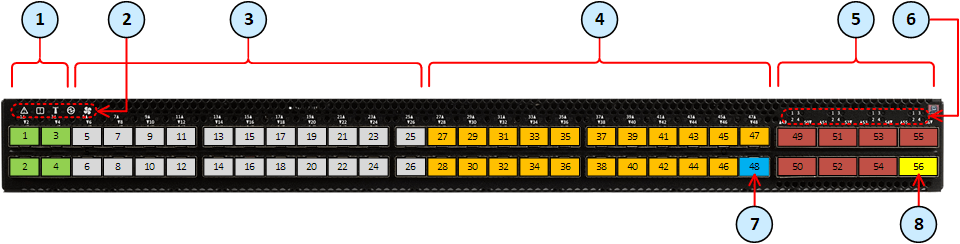
1U Maestro orchestrator with 48 SFP28 ports and eight QSFP28 ports to distribute traffic across compatible firewalls.
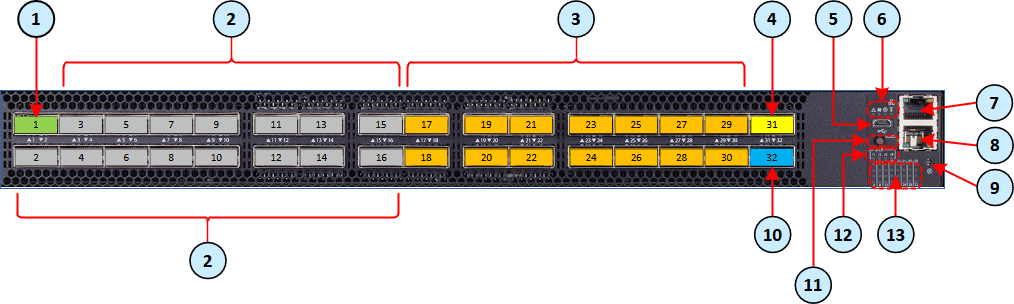
Maestro orchestrator with 32 QSFP28 ports and a 3.2 Tbps fabric for higher-density 100 GbE architectures.
Check Point security management as a service.
Centralised administration of gateways and policies.
Virtual gateways for networks in public, private and hybrid clouds.
Protection for web applications and APIs.
Secure access delivered as a service for users and applications.
Protection, detection and response capabilities for endpoints.
Email and collaboration protection according to the integrated platform.
Uma especificação isolada não dimensiona um projeto. Topologia, tráfego real, inspeção criptografada, serviços, VPN, redundância e expansão precisam ser avaliados em conjunto.