Predictive Survey
Planejamento baseado em planta, características do ambiente, requisitos, dispositivos e demanda prevista.
Users, mobile devices, handheld terminals, applications, voice, video and processes increasingly depend on wireless connectivity.
But a good wireless experience does not come simply from installing access points. Coverage, capacity, interference, density, mobility, roaming, security and wired infrastructure must work as an architecture.
Add Solution designs, implements, analyses and optimises corporate Wi-Fi networks based on the physical environment, devices, applications and what actually depends on the connection.
Uma rede wireless corporativa não deve ser projetada apenas pela posição dos Access Points em uma planta.
Materiais construtivos, interferências, radiofrequência, densidade de dispositivos, mobilidade, aplicações e características do ambiente influenciam diretamente o comportamento da rede.
A Add Solution combina Engenharia Wireless, profissionais especializados e certificados em Ekahau e ferramental profissional para realizar Site Surveys, projetar, medir e validar ambientes Wi-Fi com base em evidências reais.
Antes de instalar, medimos.Antes de decidir, analisamos.Depois de implementar, validamos.
A Add Solution conta com profissionais especializados e certificados em Ekahau e utiliza tecnologia profissional de engenharia wireless para apoiar o planejamento, análise, implementação e validação de redes Wi-Fi corporativas.
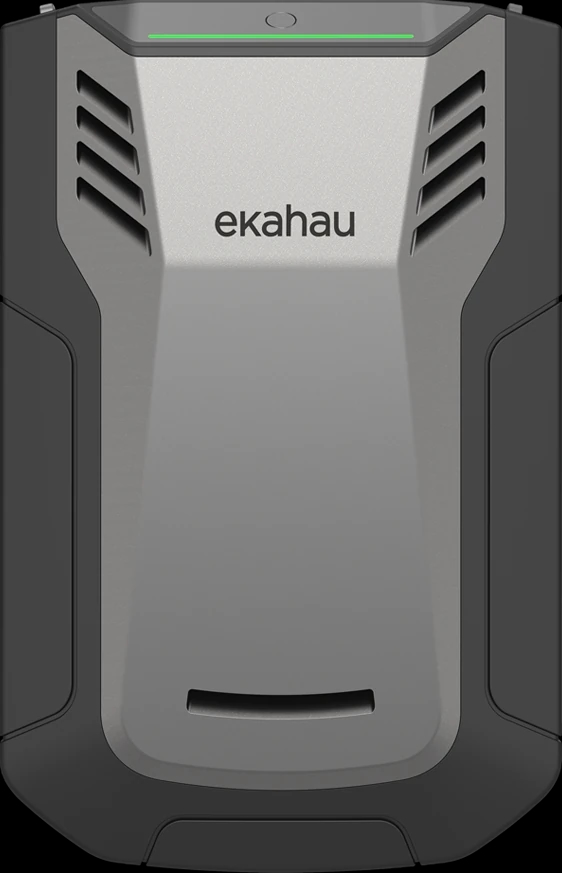
A Add Solution dispõe do Ekahau Sidekick 2 como parte do ferramental utilizado em projetos e Site Surveys profissionais.
O equipamento fornece medições especializadas do ambiente wireless e dados que apoiam a Análise de RF, o planejamento e a validação técnica da rede.
Requisitos, ambiente, aplicações e dispositivos.
Levantamento técnico e Site Survey.
Cobertura, RF, interferências e comportamento.
Arquitetura wireless baseada nos requisitos.
Instalação, configuração e integração.
Medições pós-implantação e verificação do projeto.
Planejamento baseado em planta, características do ambiente, requisitos, dispositivos e demanda prevista.
Levantamento presencial para compreender características reais do ambiente e comportamento de radiofrequência quando aplicável.
Durante o Survey Ativo, medições podem ser realizadas com o dispositivo de survey associado à infraestrutura wireless, permitindo analisar aspectos do comportamento da conexão e da rede em operação.
Medições realizadas após a implantação para verificar o comportamento do ambiente entregue em relação aos requisitos definidos para o projeto.
SINAL≠CAPACITY
COVERAGE≠EXPERIENCE
ACCESS POINT INSTALADO≠PROJETO VALIDADO
Equipamentos corporativos são parte da solução. O resultado depende da combinação entre ambiente, radiofrequência, dispositivos, aplicações, arquitetura, configuração, implantação e Validação Wi-Fi.
Ter sinal não significa necessariamente possuir uma rede Wi-Fi adequada para a operação.A Add Solution combina engenharia de radiofrequência, capacidade, mobilidade, autenticação e infraestrutura cabeada para entregar uma WLAN coerente com o uso real.

Arquitetura, execução e operação tratadas como partes da mesma responsabilidade.
The signal indicator represents only part of the experience. Noise, interference, channel utilisation, retransmissions, airtime, density and client behaviour can limit the connection even when RSSI appears adequate.
The experience must be analysed as the result of the relationship between radio, client, infrastructure and application.
Received signal strength
Signal-to-noise ratio
Shared time on the medium
Competing devices and applications
Coverage answers where a signal is available. Wireless engineering needs to determine whether that signal can support operations.
Walls, materials, structures, devices, other WLANs, access-point positioning, antennas, power and channels influence radio-frequency behaviour.
There is no universal number of access points per square metre. Design begins by understanding the space, its use and what must remain connected.
Propagation, physical boundaries and overlap define where a device can establish communication.
The number and behaviour of devices, applications and airtime determine whether available resources can support demand.
Covering a space is different from serving everyone in it.
2.4 GHz, 5 GHz and 6 GHz have distinct characteristics and applications. No band can be reduced to “bad”, “good” or “best” without considering the environment and clients.
Channel width, co-channel and adjacent-channel interference, SNR and spectrum analysis must be considered. Wi-Fi 6, Wi-Fi 6E and Wi-Fi 7 expand possibilities, but replacing APs is no substitute for good design.
Roaming depends on the relationship between RF, overlap, power, channels, authentication, infrastructure, application and client device.
The client participates in the decision. Features such as 802.11k, 802.11v and 802.11r can support mobility when compatible and properly implemented, without promises of “perfect roaming”.
Laptops, smartphones, tablets, handheld terminals, IoT and specialised devices have different radios, antennas, drivers, sensitivity, power and standards support.
Two devices in the same location may have different experiences. The design must consider the clients that will actually use the WLAN.
A heat map is a representation. It is not the design. The value lies in the engineering decisions the data enables.
Initial environment modelling.
Measurements and physical validation when needed.
Post-deployment survey to verify actual behaviour.
Investigation of interference and spectrum behaviour where applicable.
PoE, VLAN, DHCP, DNS, routing, authentication, uplinks and cabling all contribute to the experience. PoE/PoE+/PoE++ and multigigabit may be relevant depending on the access points and architecture.
802.1X, RADIUS, WPA2/WPA3 Enterprise, certificates, identity, segmentation, NAC and guest access can form part of the architecture depending on the context.
Connecting a device and authorising what it can access are different decisions.Explore Cybersecurity
Large areas, aisles, metal structures, variable inventory, handheld terminals, mobility and roaming.
Explore LogisticsMobility, density, different devices, security and continuity.
Explore HealthcarePhysical environment, interference, mobility and integration with the OT context.
Explore Industrial NetworksThe cause may lie in RF, interference, capacity, roaming, the client, authentication, DHCP, DNS, switching, cabling, WAN or the application.
Wi-Fi is where the problem appears. It is not always where the problem began.
Wireless engineering connects understanding, evidence, deployment, validation and continuous evolution.
Environment, users, devices and applications.
Propagation and initial assumptions.
Actual conditions and spectrum when needed.
Coverage, capacity, channels and integration.
Infrastructure according to the design.
Behaviour after deployment.
Evidence-driven adjustments.
Assumptions, configuration and results.
Reassess as the environment and demand change.
Respostas objetivas para dúvidas técnicas e operacionais que costumam surgir antes de um projeto.
Não necessariamente. RSSI é apenas uma variável. Ruído, interferência, airtime, densidade, retransmissões, roaming, cliente e serviços de rede também afetam a experiência.
Não existe uma proporção universal. Materiais, layout, dispositivos, aplicações, densidade, frequências e requisitos de mobilidade precisam ser considerados no projeto.
É o conjunto de modelagem, medições e validações usado para compreender propagação, cobertura, interferência e comportamento do ambiente. Pode incluir etapas preditivas, on-site, validação e análise de espectro.
A evolução tecnológica amplia capacidades, mas não substitui arquitetura. Canalização, RF, clientes, uplinks, switching, autenticação e aplicações continuam determinantes.
O cliente participa da decisão de roaming. Rádios, antenas, drivers, sensibilidade, potência e suporte a recursos como 802.11k, 802.11v e 802.11r podem variar.
Sim. A avaliação pode considerar cobertura, capacidade, interferência, roaming, configuração, infraestrutura cabeada, autenticação e comportamento dos dispositivos para orientar a evolução.
Share the context of your environment, the perceived impacts and the results your organization seeks. Add Solution will direct the conversation to the most appropriate experts.